
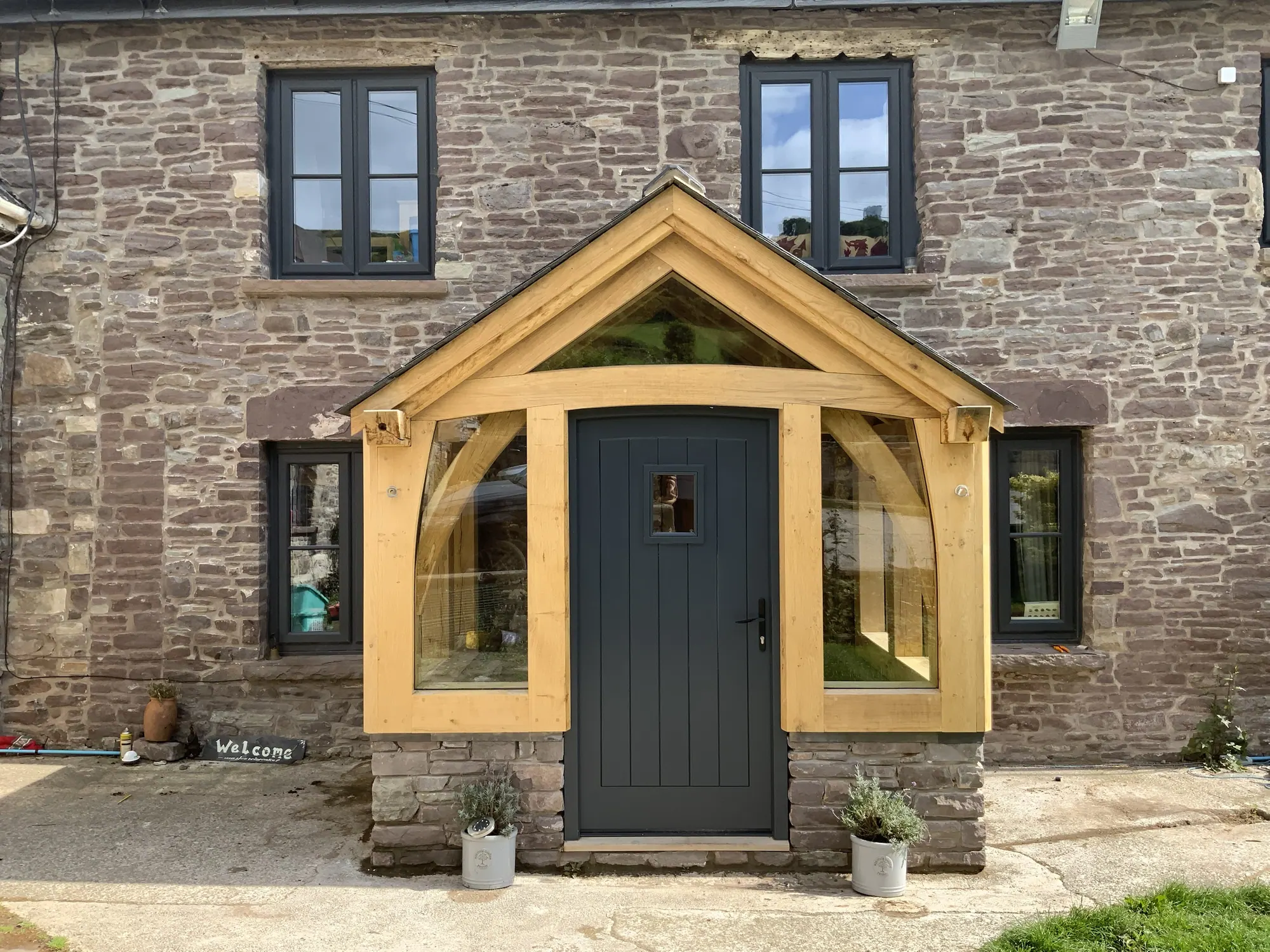
A glazed oak porch leaks where rigid glass is sealed to green oak that's still moving, and it stops leaking when the seal is kept off the oak. It isn't the oak that leaks; it's the detail. Green oak frames have a reputation for letting water in, and the timber isn't the problem. The answer is face glazing: sealed units on the outside face of the frame, taped pane to pane into one continuous skin that's fixed to the glass rather than to the timber, so the frame can move behind it without the seal ever feeling it.
Why do glazed oak porches leak?
Because the oak moves and the glass doesn't. Oak frames are normally cut green, freshly sawn and still full of water, because that's how oak is cut and jointed and because the large sections a frame needs can't be bought ready-dried. As it dries a post can shrink by up to about 20 mm on a 200 mm section, though much of that shows as a crack along the grain rather than a narrower post, and it twists a little. Curved members are where that movement shows first.
None of that weakens the frame, because the pegged joints pull tighter as it happens. The only thing at risk is anything fixed hard across that movement. Glass is rigid, so how the glass meets the oak decides whether the porch stays dry. The joints and the glazing both have to be designed to cope with the movement, and that's true whoever builds it.
What is the difference between face glazing and bead glazing?
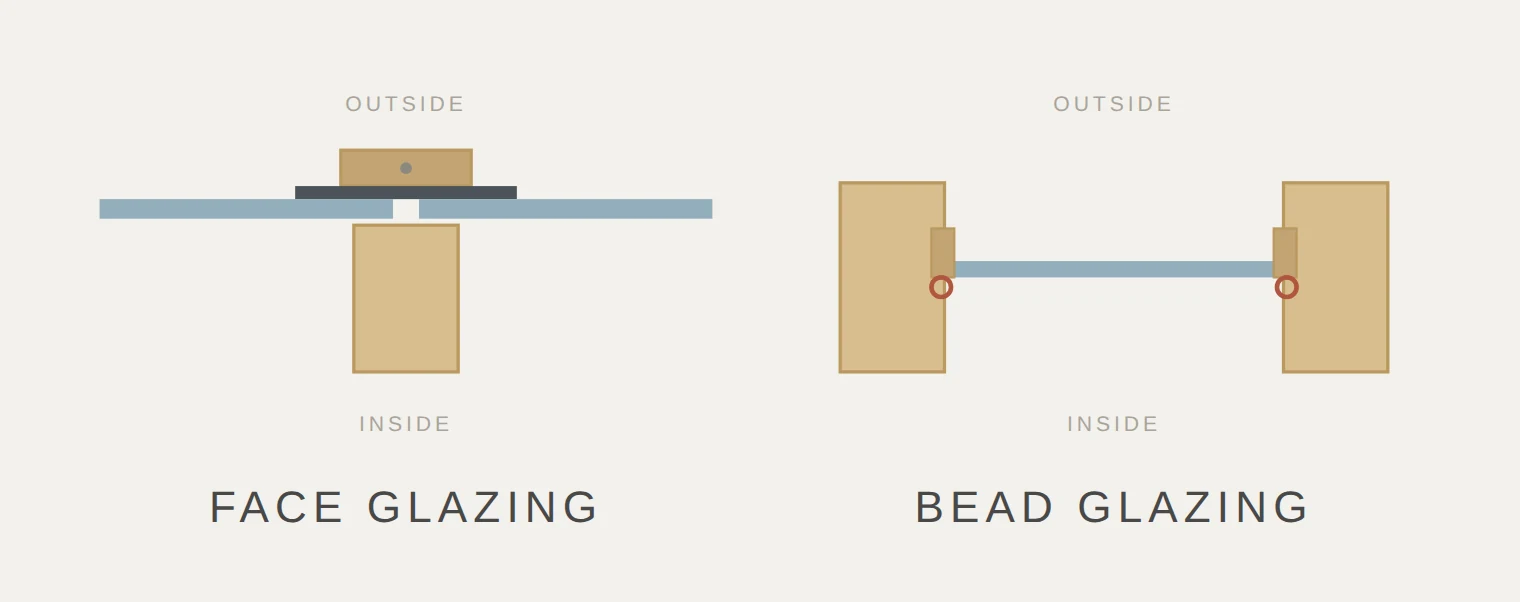
Where the seal is fixed. There are two ways to glaze an oak frame, and both are offered in the market.
Bead glazing sets each pane into a rebate cut in the oak, held in by a timber bead and sealed against the timber. Every pane has its own seal, and every seal is fixed to oak that doesn't stop moving. As the oak shrinks and twists the seal is asked to follow it, and it can't. The bead line is where the movement concentrates, so that's where the seal lets go and the water gets in. It's quick and cheap to do, but on a green oak frame it will almost inevitably leak in time. This is where the reputation comes from.
Face glazing puts the sealed units on the outside face of the frame, with the panes meeting over a member. A continuous waterproofing tape behind the oak capping bonds pane to pane into one unbroken skin across the whole elevation. That watertight layer is fixed to the glazing, not to the structural oak, so the frame moves behind it and the seal never feels it. It takes more labour and more materials, and it's the way to glaze an oak frame and keep it watertight over time.
Face glazing isn't ours alone. We and a number of other firms do it. What matters is that you know which one you're being quoted for.
What else keeps a face-glazed porch dry?
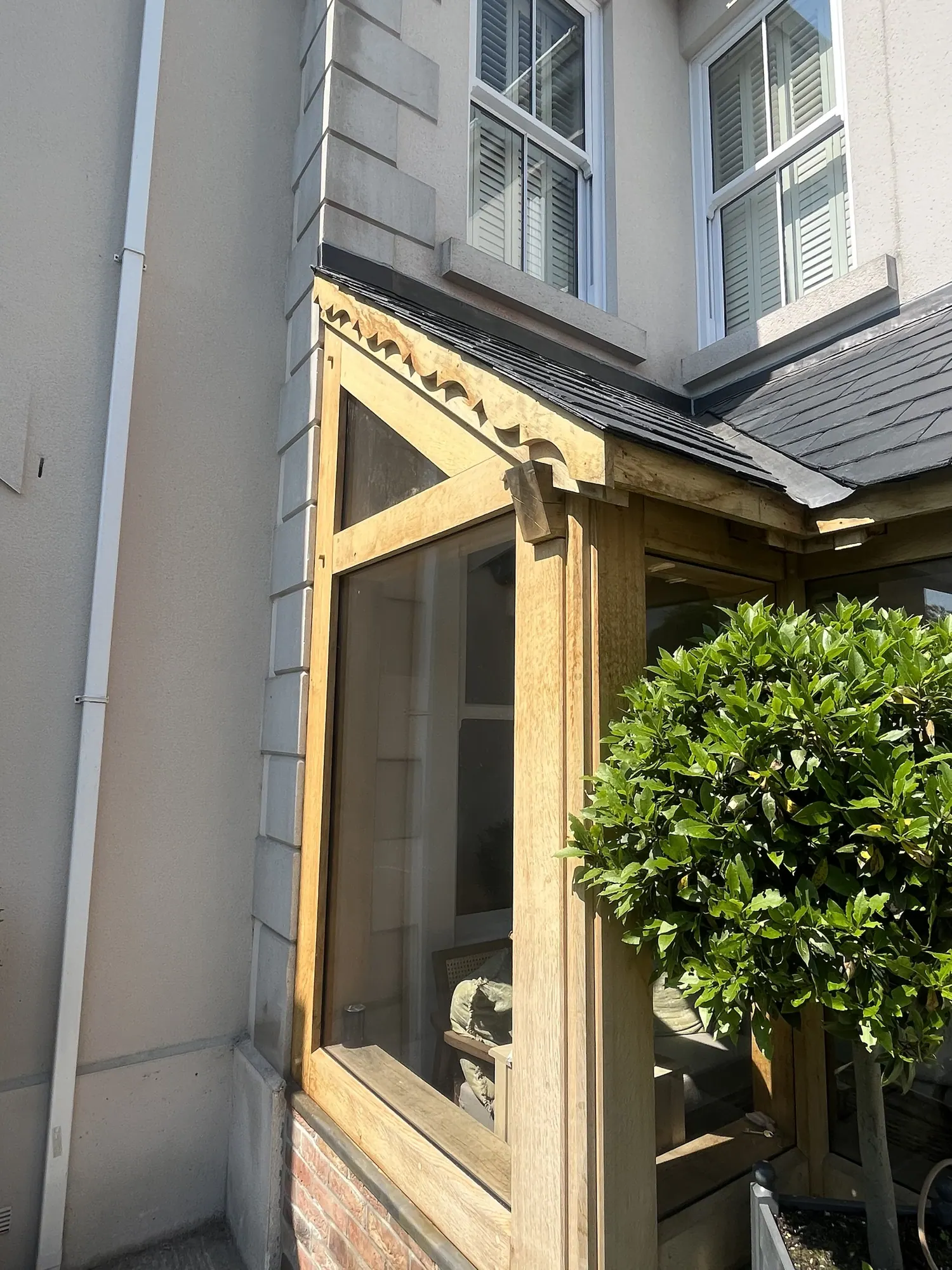
Three details you won't see once it's finished: the capping, the fixings and where the glass meets the wall.
The capping. The oak capping over the tape should be cut from dried oak and fixed through the centre of each member. Green capping shrinks after it goes on, and a fixing near the edge of a timber sits where the movement is greatest.
The fixings. Stainless, throughout. The tannin in oak corrodes ordinary steel, first as black staining and in time as failed fixings.
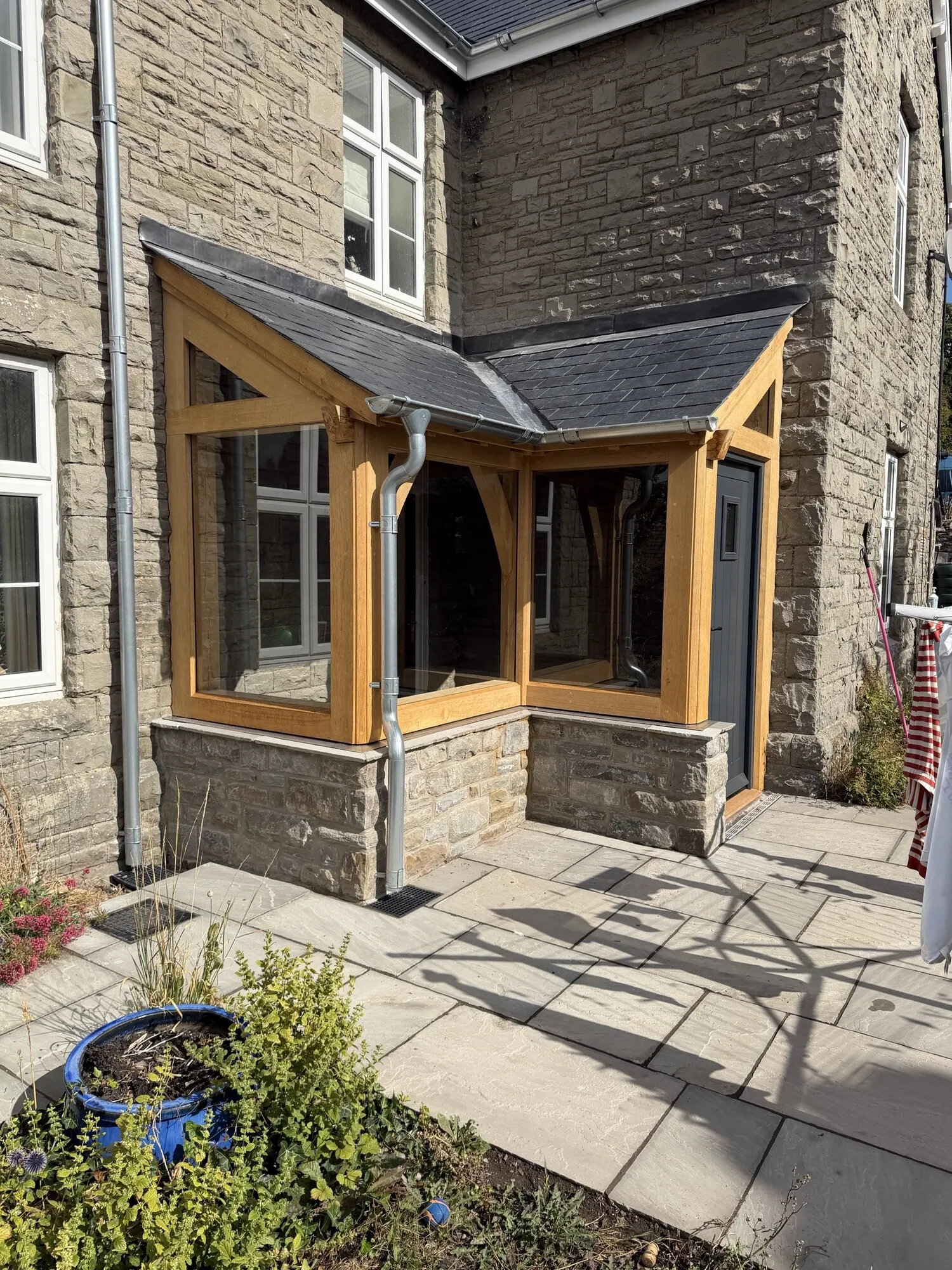
The wall. On a stone house the glass has to meet stone that was never flat, so the glazing boards are scribed to the stone rather than butted against it. At Crickhowell every one was. It isn't difficult work; it's work that has to be done properly or it shows. How the frame itself should fix to the house, and where the flashing goes, is in What goes wrong with oak porches, and how do you stop it?
Why does a curved oak porch need templated glass?
Because glass cut from a drawing won't sit tight against a curve shaped by hand. Curves aren't structural; they're a visual choice, and they change the glazing problem. Once a beam is curved, the glass has to be designed to work around it.
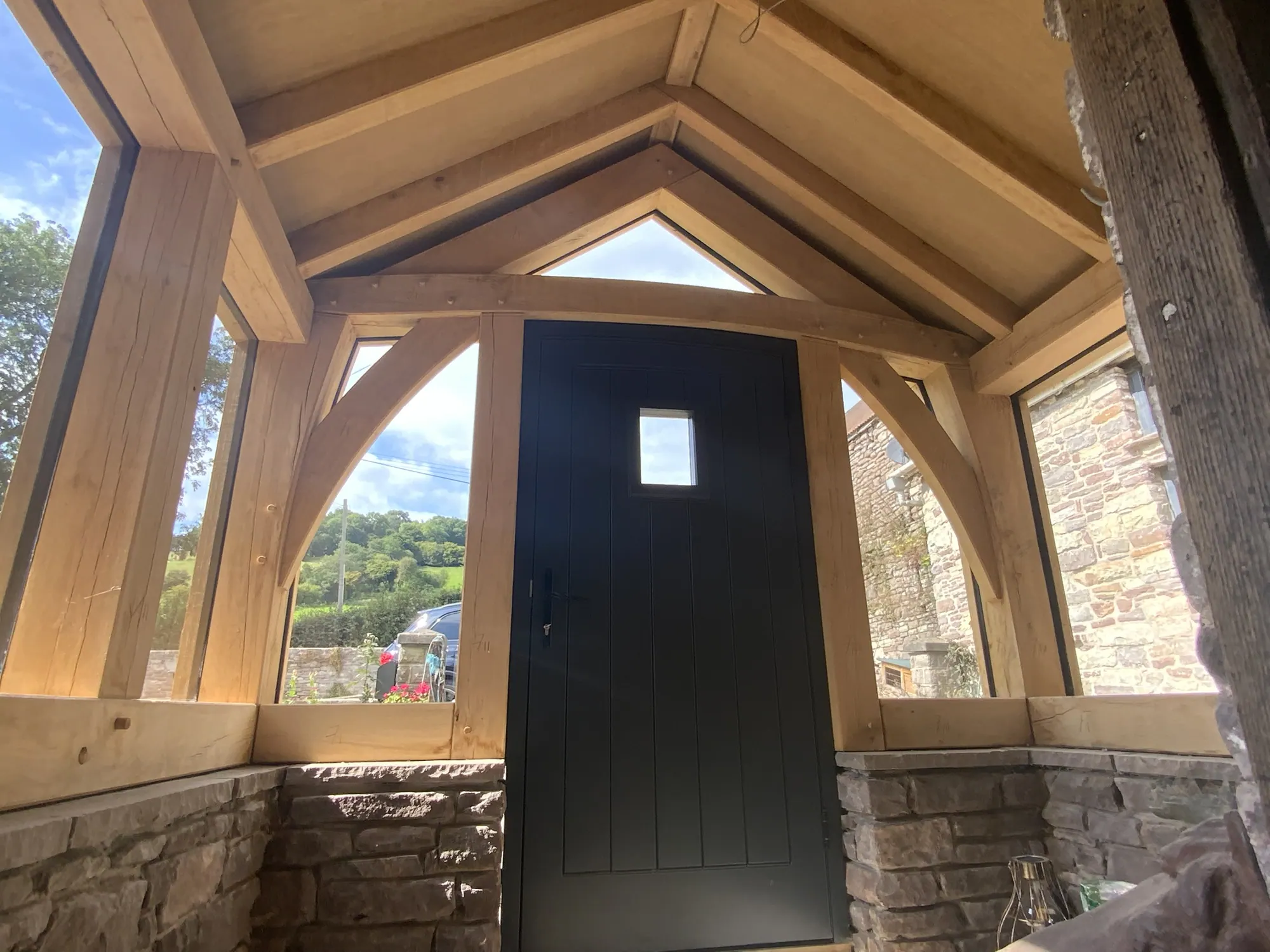
At Llanbedr the tie beam is curved, the jowl posts are shaped and the braces are curved, so nothing sits in a square opening and the door head sits under a beam that curves away from it. Rather than cut glass from drawings, we made physical templates from the raised frame and sent those to the glazier. It added about a week, and it's the only way to get glass tight against a hand-cut curve. If your porch has any curve in it, ask whether the glass will be templated. How much curves add to the frame itself is in Why do two oak porches the same size cost different money?
Does face glazing cost more?
Yes. Larger sealed units, the waterproofing system, capping cut from dried oak and stainless fixings throughout all cost more than a bead. We price face glazing per job, from the panes your porch actually needs. That price covers the sealed units, the glazing system and the fitting. The bigger the pane and the simpler its shape, the lower the cost per pane.
Bead glazing is cheaper, and that's the whole of its appeal. We can't tell you by how much, because we've never built it. Glazing is usually the biggest single line on a glazed porch, bigger than the frame on most, and it's the line that varies most between quotations. If glazing shows as a small number, ask how it's being done. What a whole glazed porch costs is in How much does an oak porch cost?
FOXTAIL OAK. We face-glaze every glazed frame, and our own team does it. We don't bead-glaze anything, at any price, because on a green oak frame it's being asked to do something it can't do for long. What you get for the difference is cleaner sightlines, more glass and a seal the oak's movement doesn't reach.
What should you ask a firm about how they glaze?
Five questions, and the answers can be compared in a way a bottom-line figure can't. Ask them of every firm, us included.
- How will you glaze it? If the glass sits in a rebate held by a bead, ask what happens to that seal when the oak shrinks.
- Is the waterproofing fixed to the glass, or to the oak? It should be the glass. Anything bonded hard to green oak moves with it and eventually stops sealing.
- What are the capping boards, and where are they fixed? Dried oak, fixed through the centre of each member.
- What fixings are you using? Stainless, throughout.
- Is the glass cut from drawings or templated off the frame? On any curved frame, templated.
Who is face glazing the wrong answer for?
Anyone for whom the lowest price decides it. Bead glazing is cheaper, and we won't be the cheapest quotation you get. It's also the wrong route if you want to glaze the frame yourself: on a face-glazed frame the materials are a small part of the job and the rest is the detail and knowing it, so we don't sell a glazed porch supply only (see Can I buy an oak porch frame and put it up myself?). And if the door only needs the rain kept off, you may not need glass at all; Open or glazed oak porch: which will you actually use? is the place to start.
What should you send us?
A photograph of the front of your house, a rough width, and what the porch is for: boots, the pram, a lobby against the cold. That's enough for a real number rather than a range. The design visit and first quotation are free. We design and build within 90 minutes of Abergavenny. We supply and install within two and a half hours, and elsewhere in the UK case by case. Get in touch through our contact page, or see oak frame porches and our prices.
Questions people ask next
Does the oak itself let water in? No. Water gets in where a seal is fixed to oak that's moving. Keep the seal on the glass and the frame can move as much as it likes.
Does the oak's movement reach the seal on a face-glazed porch? No. The watertight layer is fixed to the glazing rather than the oak, so the frame can shrink and twist behind it without pulling the seal apart.
Is face glazing something only Foxtail Oak does? No. We and a number of other firms face-glaze. Ask each firm which method they're quoting.
Related reading
Related
Oak frame porches
